Showing posts with label disaster relief. Show all posts

Monday, April 18, 2011

Perhaps Japan Red Cross Not To Blame?

Whenever I screw things up or make an error, I want t be the first to say, "I'm sorry. I was wrong. I made a mistake."
BEATLES - HELP!
In the case of my recent blog criticizing the Japan Red Cross for delays in getting relief funds to the victims of the Tohoku earthquake, tsunami and nuclear accident, I may have been mistaken.


Marriott Hotel in Ginza, Tokyo Japan


Mr. Hiro Kosugi, who is a good friend of mine and who is also the Marriott International Regional Director for Global Sales for Japan & Korea, writes in an explanation of the situation. This is an excellent rebuttal and so well written that I asked for his permission to post the entire mail. Mr. Kosugi says: 


On your blog about the Japanese Red Cross Society, I totally agree with you on their overall bureaucratic slowness to respond. However, I saw some points that you either missed, or did not touched upon that your readers may misunderstand. I hesitated to write this email, but I thought I should be the one to point them out instead of someone else you do not know.

The process of the fund allocation was clearly stated on JRC's web site as early as March 14. I cut and pasted their message from their website:

If you wish to send your donations directly to the Japanese Red Cross Society, you can donate online, or direct your funds to the following bank accounts. All funds received under this account will be transferred to the Distribution Committee, which is formed around the local governments of the disaster-affected prefectures. These funds will be distributed directly among the affected population. We are currently requesting the government to establish the Distribution Committee as soon as possible. - JRC News on 3/14/2011

As you can see, what took placed on April 15 is not that "the JRC finally decided to allocate the money", but rather "the JRC was finally given the instruction on how to allocate the money."

The real problems were 1) the time that the federal government took to create the Fund Distribution Committee and 2) the time this committee took to make a decision. Please note that it was on April 7, when Chief Cabinet Secretary Edano announced that the government decided to set up this committee. I hardly say this is the fault of the Red Cross on this particular case. It is the current Japanese Government's yet another mismanagement example.

This recovery efforts will take unbelievably long time. The money the JRCS gave to the Distribution Committees is supposed to be the first of many such monetary assistances given to the victims up north. I just hope that no money will be wasted while executing this project.

Also, your blog made it look like the JRC did not do anything until they finally transfer the money to the Distribution Committee, but that is not true, either. For this Tohoku Disaster, they have dispatched approx. 550 Emergency Response/Triage/other relief units to date, distributed 125,000 blankets, 26,000 emergency kits, etc. While I am not the right person to determine whether or not the amount of the initial relief efforts were sufficient and appropriate, JRC has done something between March 11 and April 15 for sure. 

Incidentally, I'd like you to know that the money to fund their disaster relief efforts come from their general operational budget. And this is where the majority of criticism on JRC are usually targeted in the non-emergency time.

The Japanese Red Cross Society draws their operational funds from general public like tax. You may have your personal experience that your neighborhood association come around once a year to ask - demand? - for a donation to the Red Cross with typical suggested price of 500 yen per household. The money collected from this effort is the one of the two main income sources for their operational fund. Many people complain about the "compulsory" nature of this fund collection method. I do give this money, but do not agree with the method, either.

At the moment, I am fighting my own company's bureaucracy in getting a proper amount of funding for our CSR efforts in Japan. I have been thinking long and hard about what a hotel company like Marriott can do to make a difference in the lives of these poor folks in the Tsunami-stricken region. I think I found an answer, and am trying to organize a big, company-wide project. But unfortunately, we do not have our own hotel in Japan - all are franchised, you see - and, therefore, we do not have our own employees suffering from the disaster. For my company and the Marriott Foundation, it lacks the usual priorities they look for before funding a project. When we faced Hurricanes in New Orleans and/or Cancun where we have many of our own properties, it was much easier to organize a special relief campaign…. But I will continue my efforts. I will tell you what we will be doing once my effort starts to bear some fruits. 


Thank you so very much, Mr. Kosugi. If I am mistaken about Red Cross efforts, I stand corrected. I commend you on your efforts and think it is wonderful that such a fine organization such as Marriot Hotels have decided to make the effort to do something to cooperate in the relief. I applaud your efforts.


If I made it seem that the Japan Red Cross didn't do any efforts, and they in fact did, then I am wrong. Let me though say that I have been provided with information that was taken by a direct telephone call to Japan Red Cross and some background researching that seems to indicate that they hadn't done anything at all. I am not at liberty, at this time, to name the publication that researched this information for me as I am under the impression that they are going to write an expose about Japan Red Cross activities.


Their information came to me like this:
Mike,

Here is some info that our researcher dug up from calling the Japan Red Cross, and more.

XXXXXXX

---------- Forwarded message ----------
From: 
XXXXXXXXXXXXXXX
>
Date: 2011/4/18
Subject: Let me know if you need further info.
To: XXXXXXXXXXXXX
>

According the JRCS’s PR: The delay in sending out genkin donations to disaster affected prefectures (義援金 Genkin - money will be given in cash to survivors) maybe due to the fact that the Donation Allocation Committee came together on Friday April 8 for their first meeting since the earthquake. (Members include JRC, Red Feather/JCC + reps from 15 prefectures)

Also, the earthquake was large-scale, affecting 15 prefectures so it
took (time) to organize the committee.

First money transfer:
On April 12(Tues) JRCS was requested by the allocation committee of
Fukushima, Tochigi and Nagano prefectures and was then transferred to each prefecture's allocation committee on the 13th:
 
Fukushima received Y23 bn (Y23,006,000,000)
Tochigi                   Y252m (Y     252,150,000)
Nagano                  Y  19m (Y       19,500,000)

2nd:
Miyagi (Y15,611,680,000)
Niigata (Y      16,710,000)
Saitama(Y     10,320,000)

I also found a blog site that gives us more insight on this issue - in English.


http://sarajeans-notes.blogspot.com/2011/04/basic-info-on-gienkin-donations-in.html
Excerpt:

"At 4 weeks nothing has been sent yet - a few main issues
1. Systematic problems - how to verify?
Evacuees often have no ID or proof where they are from, who they are.
City halls have also been destroyed, staff killed - no records to check in many cases in some evacuation centers.

2. Scale issues - this time 15 prefectures have been affected
Some evacuees are housed far from home, no local government
representative to help them
* Kobe EQ damage was concentrated in and around Hyogo prefectur


So there seems to be some discrepancy between the two stories. Nevertheless, if the Japan Red Cross has done something, I stand corrected thank to Mr. Hiro Kosugi. But, even comparing both sets of information, it seems true that Japan Red Cross has still not gotten any cash directly into the hands of the survivors at this time.


I sent Mr. Kosugi a copy of the mail I had received from the magazine. That mail thanked him and added:


I think this is a wonderful discussion to bring to the public attention. It not only makes people more aware of the hurdles, it might also motivate the government and Red Cross to reform their system to be quicker. Who knows? Anyway discussion is always a good thing.

Perhaps after bringing this to light and then back and forth discussions, something good will come of it.

We'll see.

I am so happy to get this type of well-written and logical rebuttal. I am also quite happy to admit I am wrong when the occasion arises. My only recourse at this moment is to apologize as I suspect that the Japan Red Cross did deliver some blankets and a minor number of goods - so I cannot insinuate that they did absolutely nothing.


I think, though, I still should stand by my final comment that I made in the blog post in question and that is, "There has got to be a better way." 


Let's hope this public discussion will help services such as the government and relief agencies to rethink their methods and to streamline their systems so that those in need do not have to wait even one second longer than is necessary.

Friday, April 15, 2011

Ishinomaki - The Black Water Documentary

After two rough days of editing, our documentary about the relief trip to Ishinomaki is finally finished. I am very proud of this work and think it is a very heavy and gripping story. 


A documentary film about Ishinomaki in Miyagi prefecture one of the hardest hit areas of the March 11, 2011 tsunami. This documentary deals with the city, the people and relief efforts completed by individuals living in Tokyo to send relief supplies to a center for disabled people in Ishinomaki.
DOUBLE CLICK ON SCREEN FOR HIGH-QUALITY FULL-SIZED VIDEO

DOUBLE CLICK ON SCREEN FOR HIGH-QUALITY FULL-SIZED VIDEO

If the link doesn't work, use this: http://www.youtube.com/watch?v=_8B6cCqtt0o


I thank Ken Nishikawa for the great effort at editing this video and believe this is the finest project I have ever worked on.


I hope you enjoy it.

Thursday, April 14, 2011

Creating and Doing World Class Work Takes Planning

There are three things I always like to keep in mind whenever I am doing any project. These are things that I find I must force myself to do as they are not easy to achieve. Those things are:


1) If you are going to do it, do it world class. 


2) To do world class you need to plan. 


3) 80% of success i sin the planning.


Ken Nishikawa and I are now in the middle of editing a documentary video about the Tohoku earthquake and tsunami disaster. We went up to Ishinomaki, the focus of our video, last Saturday April 9, 2011. I wrote about that trip and put up photos in my blog post entitled, Japan's Disaster True Ground Zero - Not Nuclear Power Plants:


Being at Ishinomkai and walking around and taking pictures and breathing the air was like a bad dream: Everything was covered in black sh*t and it smelled like a plugged toilet on a dirty, swampy fishing boat; it was like a nightmare.

Whatever you touched - or didn't touch - it didn't matter: the wrenched smell and rancid seawater mixed with the stench of death... It permeated your nostrils and it permeated your clothes.

I think I will have to shower and scrub heavily for a week or more to maybe have a chance to cleanse this putrid odor from my body pores.

It didn't matter what you touched or felt; you started feeling and smelling like the stinking spoiled, polluted ocean and the odor of death.


We shot a few hours of video footage and looked at it all yesterday and spent a few hours wondering just how it was that we were going to put this all together. Seeing Ishinomaki with your own eyes is much worse than TV. We need to capture the nightmarishness, the smell, the atmosphere of the place.


We need a good plan for that. We watched the footage. We threw around lots of different ways to approach the subject. Some of the idea were good, some of the ideas were terrible.


I think, after much discussion, we finally settled on a pretty good idea.


So far, the video is going brilliantly. I expect to have it up on Youtube within the next 15 ~ 16 hours. I will place a link on this blog for you to see it.


The reason why the video will be world class and "BBC quality" is that Ken & I sat down, before starting and discussed for several hours different ideas and ways to approach the problem. Then we came up with what we thought was a good starting point. We're glad we did.


The discussion and planning were a crucial part of the success of this video project... It is necessary for the success of any project.


Are you discussing and planning enough with your staff before you jump into the project or are you shooting from the hip? Remember, 80% of success is in the planning.


Teamwork requires team effort and team opinion.... Don't do like Dilbert's boss says, "Teamwork is a lot of people doing what I say." 


Sunday, April 10, 2011

80 Elementary School Children Who Were Washed Away in the Tsunami

Everyday, more and more stories of terrible suffering and deaths have come to my knowledge about the earthquake and resulting tsunami of March 11, 2011.
TEARS IN HEAVEN (INSTRUMENTAL)
I am writing about these things because I feel that the people of the world need to know about the real tragedy here.
It has now been reported in Japanese media about how 80 elementary school students - who had evacuated their school to a designated evacuation area - died when the tsunami suddenly came upon them and washed them away.


I won't go into the details of this. If you want to see the original article, go here. To translate it, go to Google Translation here. There is a video of the aftermath below.


Notice the smashed windows on the second floor of the school. 
Those were broken due to the waves of the tsunami.


I can't help but the cry about this. I cannot stop the images going over and over in my head of poor 5~6-year old little boys and girls (up to 12-year-olds) crying in stark fear and panic as the ocean engulfed them. They followed the directions of their teachers and stood out on open ground fearing the earthquake. Little did they know that the tsunami was coming. At that school, the waves of the tsunami, by the way, reached past the second floor of the school building. Those waves were over about 5.5 meters (about 17 feet) into the air. Three and four foot tall children did not have a chance against waves that high and a tide moving at more than 60 miles per hour.


There was no where for them to run and no where for them to hide.


Oh, how they must have suffered and cried for their parents. What a terrible horror this must have been.


I pray to God for these children and their parents. I'm sure that those wonderful boys and girls are in heaven. In a place where there is no pain and they can be happy. 


Aftermath at Ishinomaki Ookawa Public Elementary School

My friend's and I made a trip to Ishinomaki the other day to bring relief supplies to the handicapped and to the aged. You can see photos of the devastation here in Japan's True Ground Zero - Not Nuclear Power Plants. Ken Nishikawa and I will be making a documentary video of the trip and plan on finishing it this week. 

I will never forget that trip to Ishinomaki and still haven't be able to grasp and comprehend everything I saw and the extent of the destruction and misery and pain. I cannot put into words what we witnessed.

I probably never will.


We can't help these children anymore but we can help share the love as there are many many more in need whose lives have been destroyed and who lost loved ones.... 


You can also help to share the love by taking this time to hug your own child and telling them that you love them.


-------


Original News Stories:


http://net-news-jp.jugem.jp/?eid=1368


http://pop-rin.seesaa.net/article/192830278.html

Saturday, April 2, 2011

Charity Concert Today in Shibuya

George Williams, Taro Furukawa and I will be hosting a charity concert for the benefit of the people who have suffered during the Tohoku earthquake and tsunami crisis. This is in cooperation with BAM! (Monday ~ Friday nights from 9 pm ~ 11 pm on 76.1 InterFM) and the good folks at InterFM along with the venue and the bands. Entrance is free and it going to be a lot of fun and we get to help out. 100% of the proceeds will go to Red Cross Japan and I hope to raise an extra ¥50,000 to help finance a DIY relief supplies mission (pay for truck rental and gasoline) to Ishinomaki on April 8, 2011.


Everyone is welcomed. The entrance is free. Donations boxes will be inside. 

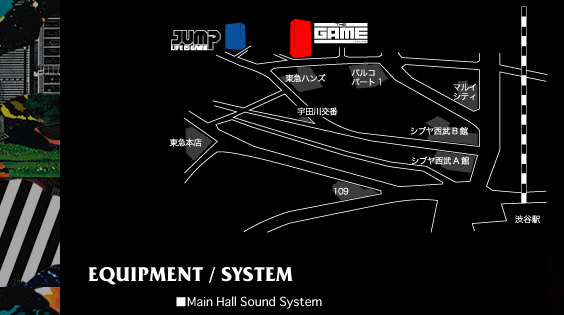
Today! Sunday 4/3 Doors open at 4 pm Start 5 pm @ Shibuya The Game

Shibuya The Game: http://www.shibuyathegame.com/SHOPINFO


Bands Appearing:

Who The Bitch

Moja

Poni Camp

Bliean 

DJ: Wakaan

Entrance is free!!!! Thanks to 76.1 InterFM!

Open Letter to All Sensationalist Reporters and Bloggers

I get so much paranoid tabloid-level sensationalist nonsense coming across my desk these days that I have decided to give up replying to each one and have decided to write this open letter to bloggers and "real" reporters on both the Internet and MSM.


Dear Friends,


This is an attempt to ask you all to do a little soul-searching and be a little bit more responsible in your writing and what you publish. I am not directing this to anyone in particular as these are unique times in our lives and I can see how I might even be guilty of what I am complaining about. So, please bear with me and take my words to heart and understand that, not just for you, these are words that I want to reflect upon myself too...
In these days of poor reporting and just plain bad information it is not useful for us to be adding to people's worries and fears. When we don't know the story all we can do is to stick with the facts. 


Let me repeat that: Just stick with facts. These are thing we know to be true: Fear mongering, innuendo, and sensationalism are doing no one any good.


Write to your hearts content, but if you are going to write "End of the World" type of content (like on Journalist Wall of Shame) then it might be best to state that it is so. Even Orson Wells' masterpiece, "War of the World'swas an episode of the American radio drama anthology series Mercury Theatre on the Air. It was performed as a Halloween episode of the series on October 30, 1938 and aired over the Columbia Broadcasting System radio network. It was billed as drama!
Please be more responsible with your writing. I am trying my best to do so also. I think it is my duty (as a former newsman and host of CNN "Newswave" on JCTV until 1990). As a former B-grade news caster, I have seen a lot of crap reported as truth from "reputable" news sources. I have myself been guilty of doing that sort of reporting too! It is a shame that Internet news sources - the supposed alternative - would be found completely guilt - in many cases - of the same crime as the old school mass media.
Before you write about how this nuclear accident has ruined Japan or life in this country, consider facts:
At the end of WWII, Japan had over 2 million dead military and nearly 1 million dead civilians. Her cities had been carpet bombed into ruin. The economy and people were in shambles. Yet she recovered. 
Today? Not to downplay the suffering of those affected, but the disaster in Miyagi and surrounding areas is bad, but, in the long term view of things, merely a blip on the screen of Japan. Had this accident happened in Tokyo where 65 million people live (as opposed to the 750,000 in Miyagi), near the Tokai or Hamaoka reactor – that might result in a real catastrophe.
So far the numbers of dead from the nuclear reactor are: zero. One crane operator died at Fukushima when his crane collapsed during the earthquake. The numbers of dead, injured or missing from the earthquake and tsunami are at over 27,480. That is the real crisis.


Japan will soon recover from this mess. What she probably won't recover from - and what few write about - even those who claim some sort of economic expertise - is Japan's debt problem and her aged population. Now those things Japan may not recover from for a long time and those things are going to kill a lot of people.
If news reporters or bloggers want to report on the true crisis then write about those poor old folks, men, women and small children.
At the least, Mr. & Mrs. sensationalist reporter and blogger do something positive by doing the minimum and placing information on how to donate and help relieve the suffering of those people somewhere on your blog or in your article.
This continuation of the sensationalism, scare mongering and fear - along with an attitude of sorrow is doing no one any good. We need to get our lives back together. We need to be positive and grow.
Making excuses for why you ran away, scaring people, living in fear and anxiety are not the symptoms of a healthy mind. For the good of those who have suffered and lost loved ones and for our own good and the good of our families, we must return to our daily lives - and not feel guilty about it. We must laugh again and go out and have fun. We must get back to normal. We must be positive. We've got to get the economy rolling again.
Fear, anxiety and worry are not signs of mental health. Laughing, going out, being happy, enjoying life? These are signs of a healthy mind.
I am not advocating that everyone write "Happy Happy Joy Joy" all the time. But I am advocating responsible reporting and blogging and I am advocating that you stick to a subject that you are expert at... and, at least, post on your blog or article information as to how people can get off their asses and help those suffering up north as opposed to paranoid nail biting and worrying about the end of the world.
If you are not a part of the solution, you are part of the problem. 
You can find information on how you can help with the relief efforts at the very top of this page. Thanks.

Thursday, March 24, 2011

Fly-Jin Hits Even the Wall Street Journal

From the "They can run but they can't hide files;" as was reported in an editorial on this very blog on Sunday March 15 (just 3.5 days after the big earthquake), that the blow back from the panic and irresponsible reactions of foreign business management in Japan - at the beginning of the nuclear accident - was disgraceful and that there would be repercussions. 
FRANK SINATRA - COME FLY WITH ME
In some cases, the flight of the foreign community was a crime; it was dishonest and theft against their respective employers. It also first reported and predicted on this very blog that there was going to be blow back against these foreigners. In fact, even the Wall Street Journal has picked up on this story. Let me pat you and myself on the back for creating and commenting on this story nearly 2 weeks before the Wall Street Journal. Read on!


First, a time line. In an early post, just days after the earthquake and the height of the panic, I wrote about how the foreign community in Tokyo were being completely irrational by panicking and running away. This contributed to people missing the important issue: 400,000 people without shelter, food or water in the dead of winter in Northern Japan. The foreigners panicking was completely without base and any scientific reasoning.

Tokyo Crisis Update: Nuclear Meltdowns, Drama Queens, TV News and Coca Cola


I, like most Tokyo people, have merely been inconvenienced by this incredible chain of events. I do not think, though, that I should adopt a "victim complex" like many people do when these sorts of things occur. I think doing so is dishonest. I believe that taking a "victim complex" identity like many people do only cheapens the experience of those who have truly suffered.

One need only remember the group victim complex shown by Americans after 9/11 for an example of that. As for me, I'm doing my best to suppress my inner "Drama Queen." 

Folks in Tokyo have not suffered. We have been greatly inconvenienced. That's all. That's not to say that many people haven't over reacted and panicked. They have.

I will, here, take this chance to strongly criticize the foreign management of Coca-Cola Japan for showing such a compete lack of responsibility to their employees and to the Japanese people. So much for Corporate Social Responsibility, eh Coca-Cola? Also, so much for dedication to your work and company. Leaving on a "business trip"? Disgusting. Don't you clowns have the guts to even say that you are running away? Saying that it is a "business trip" allows you to get paid from your company at the same time you skirt your responsibilities all the while you expect that your staff and workers continue on like everyday? If I were your boss, we'd definitely have more than a few words about this. I'd probably fire you.

I can understand you sending your family away... But you running away too? And then expecting to get paid and your employees to carry on in your absence at the same time!?

Scandalous.


This theme held true throughout my blog posting over the next several days. I used a major soft drink company as an example (because I knew it was true first hand) as this is a huge international company, but there were many other  companies whose foreign management fall into the same category. I commented as to how actions by many foreigners and the mass media were criminal (at the best dishonest) and that these people who panicked or induced panic needed to be held accountable - at the minimum to themselves and their families - in some cases criminal. I definitively asked the question about trust between Japanese and the foreign management who in a grossly irresponsible manner left their companies - on paid leave no less - and jumped ship.


If these people really thought the situation was so bad and dangerous, then why didn't they tell their staff to go home and care for their families? 


(Note to selfish foreigner: Your Japanese staff think you are just like an irresponsible teenager, regardless of what they say to your face. Your position and status are worse than "dog house". The respect they held for you - if they ever had any - is completely compromised. Remember: It takes a very long time to build trust, it takes one action to destroy that trust forever.) 


What are you going to do about it, foreign manager? 


Japan Nuclear Disaster? The Scorecard So Far


What's going to happen to the relationship between the Japanese and the foreign community in Japan? I think the actions of many of the foreigners (not just in the media) have created much distrust and disrespect of those foreigners (especially in management) by their Japanese counter-parts. I already posted about one foreign company, Coca Cola, whose foreign upper-management committed the sin of running away while taking paid leave (isn't stealing from your own company considered theft?) while expecting the Japanese to continue working as if nothing at all happened?

If the situation were so bad and they bothered to make rational decisions - while showing a tiny bit of leadership qualities - then they'd have had the guts to say that they were running away and told the Japanese staff to go home; or they would have sent their families away and stayed with the ship. I know for first hand fact that the Japanese staff left over by their panicking foreign bosses have very little respect for those people. They probably should have zero; which were just about the odds of a nuclear disaster hitting Tokyo.


There are many foreigners who read this blog... About one half are in Japan. Why this shirking of duty was explained in excellent fashion by a reader living here in Japan. This brilliant and succinct explanation of the problem appeared in a comments section of one of my posts. The reader was countering the ridiculous argument that claimed that the foreigners who left were, "Forced out" it read:

The people who fled irresponsibly were not 'forced out' as you say. Panicked or not, they acted of their own free will, and left others hanging because of their actions.

Japanese do have respect, manners and kindness for others, and also a sense of responsibility and self-sacrifice. Example: the 'Fukushima 50'.

I have many friends and acquaintances in large corporations and government offices, and they all say that not one of their Japanese bosses fled in panic and left the rest to their fate. Do you know why?

Responsibility.

Think long and hard about that word before you bleat any more asininity.

One of the Japanese words for an executive, manager or other person in charge is 'sekininsha', which literally means 'responsible person'. These people are not just responsible for their workplaces and the people below them during fair weather; when the sh*t hits the fan, they are also expected to step up and take responsibility. That is to say, *leaders* are expected to *lead*.


Absolutely. Like I have already written, these people who panicked and left Tokyo in an irrational, irresponsible blur should resign their posts immediately if they are "sekininsha" (responsible person) at their job. Their position has been compromised. They are ruined and they know it.

But, I won't expect them to resign of their free will. They have already showed us their lack of true leadership abilities when they panicked and left. Who would or could expect them to act like a true dedicated leader like Jerome Chouchan of Godiva Chocolates who showed us his true grit?

Mr. Chouchan, a Frenchman, decided to send his family away but he stayed on because he said that he felt like, "If I leave now and leave my Japanese staff to fend for themselves it would be like the captain leaving the sinking ship first."

Soon after these blog posts ran, where I criticized these foreigners, I began taking flak from people defending the actions of these people. I think no one can defend the actions of those whom I attacked. Please read the interesting back and forth between the foreigners who agreed with me and those who wish to defend the actions of those who ran away on the articles that I have linked to. 

The discussion got even more heated when I reported as to how a new word, filled with derision against those who fled, had entered the Japanese lexicon and was hitting Twitter hard all over Japan lead by a famous Japanese TV reporter. 


New Word in Japanese Lexicon: "Fly-Jin"

Akiko Fujita tweets, Learned new term tonight: "Fly-Jin." Foreigners who fled Japan.

Also, in that article, once again I stressed:

The Japanese are not happy - some are disgusted -by the rash actions of the foreign community. They've lost much respect for those who fled like panic stricken kids. The back lash has begun. Whispered voices filled with derision and tittering behind people's backs.

Once again, a reader provided me with a better commentary about the subject than I could ever write in the comments section of that same post countering the apologists for the "Fly-Jins.":

What the Useful Idiots (uh oh, there I go calling names again) fail to understand is that there is a world of difference between getting yourself and family out of potential danger if you have the resources and inclination to do so, and running away irresponsibly at the expense of others like the Coca Cola execs and others did (i.e. lying to justify the expropriation of company funds for your escape, and leaving others you should be responsible for behind to cover your arse as you run).

I have no problem with the former, even if I think it was a knee-jerk panic reaction in this case. If you have the means to do so and your actions do not leave anyone hanging in your stead, knock yourself out. However, I do have a big problem with the latter, and will continue to criticize the actions of the Coca Cola execs and others who acted in such a cowardly and irresponsible manner.

So again, to make things as clear as possible:

If you fled in a responsible manner - that is to say within your own resources and not leaving others hanging in your stead - then I have no problem with you. I also have no problem with anyone defending those people, be they foreign or Japanese.

However, if you lied, stole, or otherwise acted irresponsibly and/or left others to potentially hang in your stead, then to hell with you. And to hell with anyone defending these scum.


Thanks to all of have added to this conversation. I stand by all my remarks as my excuse is that I was merely predicting what was going to happen and told of the future repercussions of failed leadership and poor decision making. I also am guilty of being the messenger boy. Of course, when those who are guilty, hate the message, they try to kill the messenger boy.


Now, the results of this shameful affair have even hit the pages of the Wall Street Journal.


The Wall Street Journal reports in "Expatriates Tiptoe Back Into the Office": 


Life in Japan is showing tentative signs of returning to normal, but a fresh challenge may be facing the expatriates and Japanese who left and are now trickling back to their offices: how to cope with ostracism and anger from their colleagues who have worked through the crisis.
One foreigner, a fluent Japanese speaker at a large Japanese company, said that his Japanese manager and colleagues were "furious" with him for moving to Osaka for three days last week and that he felt he was going to have to be very careful to avoid being ostracized upon returning to work in Tokyo.


The flight of the foreigners—known as gaijinin Japanese—has polarized some offices in Tokyo. Last week, departures from Japan reached a fever pitch after the U.S. Embassy unveiled a voluntary evacuation notice and sent in planes to ferry Americans to safe havens. In the exodus, a new term was coined for foreigners fleeing Japan: flyjin. 


Think about it: Everyone knows the government are idiots... You pride yourselves on being in private businesses yet when these clowns tell you to panic, you do? Really? I also remember when they told us about Swine Flu, SARS, Bird Flu and Saddam's Nooklar weapons too... And you fools believe what they say? Ha!


So, now, you foreigners who are apologists for those who shamefully ran away can complain to me or call me names all you want... What you say to me isn't going to do you any good in the minds fo your staff... I am not your judge; they are. 


You messed up big time and you know it. 


Still think you shouldn't feel ashamed? 


Denial isn't just a river in Egypt.


NOTE: I have information that Coca-Cola has donated $25 million dollars to the relief fund for those poor folks in Northern Japan. Thanks. Everything helps. It is appreciated. But, should we awe-struck? Maybe. Maybe not. 


Nice


I have information that I wish for you to use to compare. Try Uni-Qlo vs. Coca-Cola. There's no question as to which is the bigger monster company, right?


Uni-Qlo - a much smaller company than Coca-Cola - on March 14, 2011 - just three days after the earthquake - donated $4 million of dollars to the disaster fund. That same day, the president of Uni-Qlo, Mr. Yanagi, donated $10 million of dollars -  out of his own pocket for this effort! Add to that $7 million dollars worth of clothes to the relief effort. Also, a donation effort at 2,200 Uni-Qlo stores nationwide!  


Now compare that with the efforts of Coca-Cola who is a much bigger company with much more resources... Well, thanks Coca-Cola, but I'm not so impressed... Then again, I guess I should be grateful and can excuse you for not acting quickly. After all, your upper management in Japan had all ran away when they jumped ship at the beginning of this mess. I shouldn't expect that the Japanese middle management would have the authority to make donations or any other important leadership decisions. 


The Japanese staff can only be depended on for holding the bag - not the important decisions - while the foreigners run away..... right? 


A big thanks to alert reader Mark (still) in Tokyo Owens for the links to WSJ!
Related Posts Plugin for WordPress, Blogger...